What to drink during intermittent fasting in the UAE: water, electrolytes and deuterium-depleted water

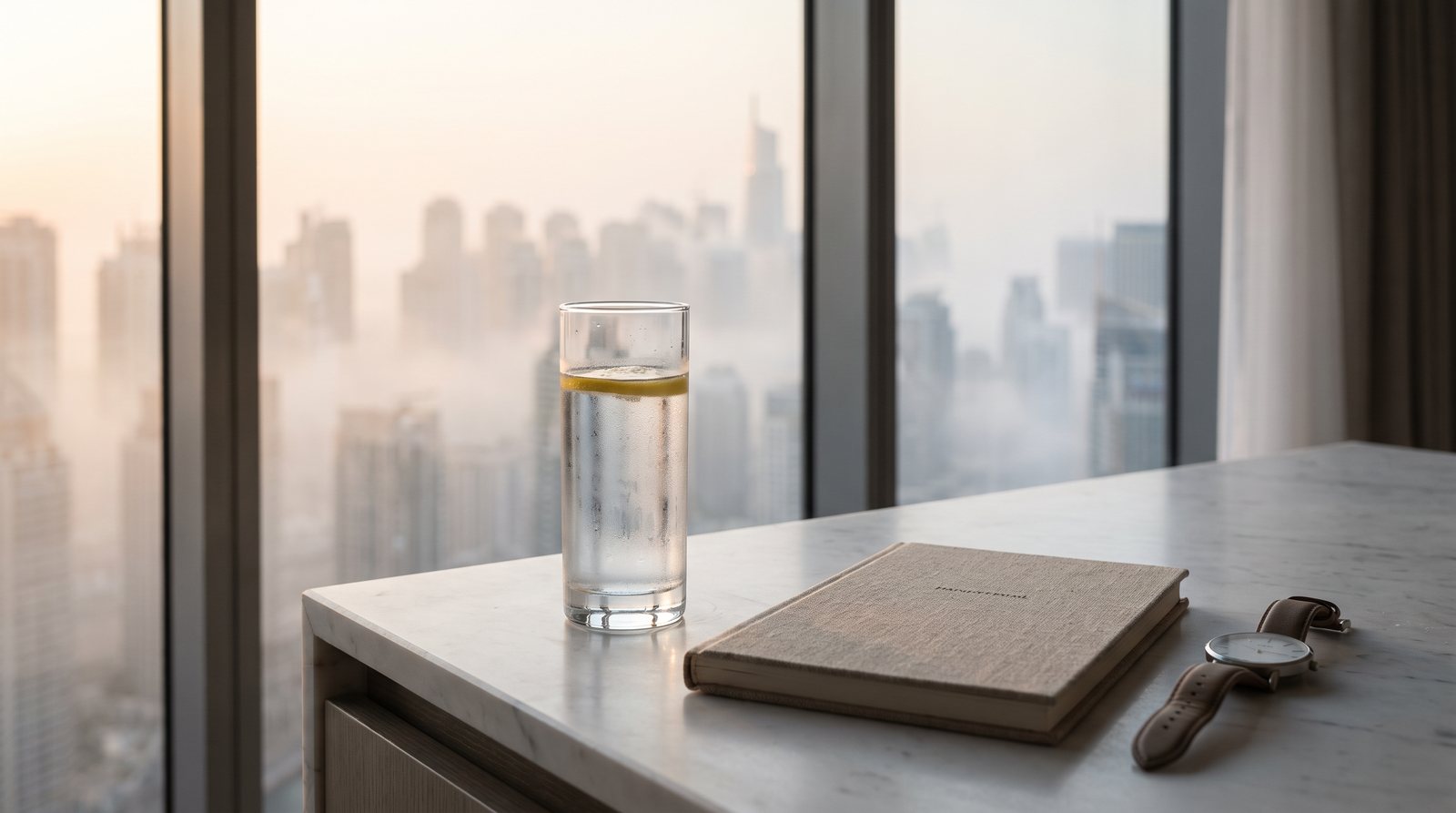
What to drink during intermittent fasting comes down to one rule: anything with effectively zero calories keeps the fast intact. That means water, black coffee, plain tea and unsweetened sparkling water are all fine. In the UAE the question has a second layer, because a 16-hour fasting window that runs through a 42°C afternoon is a hydration challenge as much as a discipline one. This guide covers what is allowed, what quietly breaks a fast, how to stay hydrated across a long fasting window in the Emirates, and where deuterium-depleted water sits in the picture.
What can you drink while intermittent fasting?
The fasting window works by keeping insulin low and letting the body draw on stored energy. Drinks that do not trigger a meaningful insulin response leave that process alone.
| Drink | Breaks the fast? | Notes |
|---|---|---|
| Still or sparkling water | No | The foundation. Plain, mineral, or deuterium-depleted all count as water. |
| Black coffee | No | Under 5 kcal per cup. Skip milk, sugar and flavoured syrups. |
| Plain tea, green tea, herbal tea | No | Unsweetened only. Karak and chai with milk are a meal. |
| Water with a squeeze of lemon or cucumber | Effectively no | A few kcal at most; most protocols allow it. |
| Sugar-free electrolyte mix | No | Sodium, potassium and magnesium without carbohydrate. Check the label for sugar and maltodextrin. |
| Diet soft drinks | Technically no | Zero calories, but some people report increased hunger. Use sparingly. |
| Bone broth | Yes | Contains protein and calories. Fine in the eating window. |
| Laban, milk, juice, coconut water | Yes | All carry sugar or protein. Save them for iftar-style refeeding. |
Why fasting in the UAE needs a hydration plan of its own
Roughly 20 per cent of the water most people take in each day comes from food, especially fruit, vegetables and cooked grains. Compress your eating into eight hours and that food-water arrives in a short burst rather than steadily. Add an air-conditioned office, a commute in 40°C heat and a gym session, and it is easy to run a litre or more behind by mid-afternoon without noticing, because fasting also blunts thirst for some people.
Anyone in the Emirates who has fasted through Ramadan knows the pattern: the headache at 3 pm is usually fluid and sodium, not hunger. The same physiology applies to a 16:8 or 18:6 schedule, just with the option of drinking through it.
A fasting-window hydration schedule for the UAE
- On waking: 500 ml of water before coffee. Overnight losses in dry air-conditioned bedrooms are real.
- Mid-morning: 300 to 500 ml. If you trained early, add a pinch of salt or a sugar-free electrolyte sachet.
- Early afternoon: 500 ml. This is the window where most people slip.
- Before breaking the fast: 300 ml, so the first meal is not doing double duty as rehydration.
- Eating window: water with meals plus high-water foods such as cucumber, watermelon, tomatoes and soups.
That lands at around two to two and a half litres over the day for a typical adult, more if you train outdoors. Pale-straw urine remains the best real-time check.
Electrolytes: the part most fasting guides underplay
When insulin drops during a fast, the kidneys excrete more sodium. Combine that with sweat losses in a Gulf summer and you get the classic fasting complaints: headache, light-headedness on standing, poor sleep and muscle cramps. Plain water alone can make it worse by diluting what sodium remains.
The fix is unglamorous. Salt your food properly in the eating window, and during longer fasts or after any outdoor activity add a sugar-free electrolyte to one of your drinks. A quarter teaspoon of salt in 500 ml of water does the same job for almost nothing. Magnesium in the evening helps some people with sleep and cramps, though the evidence there is mixed.
Does deuterium-depleted water belong in a fasting routine?
This question comes up a lot in fasting and ketogenic communities, so it deserves a straight answer rather than a sales pitch. Deuterium-depleted water is ordinary drinking water with some of its naturally occurring heavy hydrogen removed: natural water sits at about 150 parts per million of deuterium, and Cancro is produced at 125 ppm. It contains no calories and no electrolytes. From a fasting-rules standpoint it is simply water, and it does not break a fast.
The reason it attracts interest from fasters is a theory rather than a proven result. When the body burns fat, the mitochondria produce their own “metabolic water” as a by-product, and that water is naturally lower in deuterium than what you drink. Some researchers have proposed that fasting and low-carbohydrate eating lower the body’s deuterium load through this route, and that drinking deuterium-depleted water might support the same direction. It is a coherent idea. It is also, at this point, mostly supported by cell and animal work. A 2024 scoping review in Metabolomics (Korchinsky et al.) found 15 relevant studies and concluded that randomised controlled trials are needed before cause and effect can be claimed. Nobody has run a trial of deuterium-depleted water in people doing intermittent fasting, and claims online that it “deepens” or “accelerates” a fast go well beyond the evidence.
The honest position is this: if you are going to drink two litres of water a day through your fasting window anyway, choosing a deuterium-depleted water changes nothing about the fast itself and costs you nothing in terms of fasting rules. Whether the isotope difference matters to you is a personal call, best made after a few weeks rather than on the strength of anyone’s marketing, including ours.
Common mistakes when fasting in the Gulf
- Drinking nothing until the coffee. Two espressos on an empty, dehydrated stomach is a recipe for the 11 am jitters.
- Front-loading water at the end. A litre in the last 30 minutes before eating mostly passes straight through. Spread it out.
- Training at 6 pm in July. The evening on the coast is often more humid than dawn. Fasted training is fine for most healthy adults, but do it early and indoors in summer.
- Ignoring sodium. The single most common cause of fasting headaches and poor sleep.
- Breaking the fast with sugar. Dates and juice are traditional for a reason, but follow them quickly with protein, fibre and fluid.
Who should not fast without medical advice
Intermittent fasting is not appropriate for everyone. Anyone who is pregnant or breastfeeding, taking medication for blood sugar or blood pressure, under 18, underweight, or with a history of disordered eating should speak to a doctor before starting. In the UAE that also means being realistic about heat: a fasting window that leaves you dizzy in a car park at 2 pm is not a wellness practice.
Cancro is a beverage, not a medicine. It is not intended to diagnose, treat, cure, or prevent any disease. Research referenced on this page describes deuterium-depleted water in general and is not a claim about this product. Dietary guidance here is general information for healthy adults and is not a substitute for advice from a qualified clinician.
Related reading
- What is deuterium-depleted water? A plain-English guide
- Is deuterium-depleted water safe? What the evidence does and does not show
- The science behind Cancro: how deuterium is removed
- Where the deuterium in your body comes from: water, food, metabolic water, and how fast it changes
- How to read a bottled water label in the UAE: TDS, pH, sodium, magnesium, potassium and deuterium