How to read a bottled water label in the UAE: TDS, pH, sodium, magnesium, potassium and deuterium

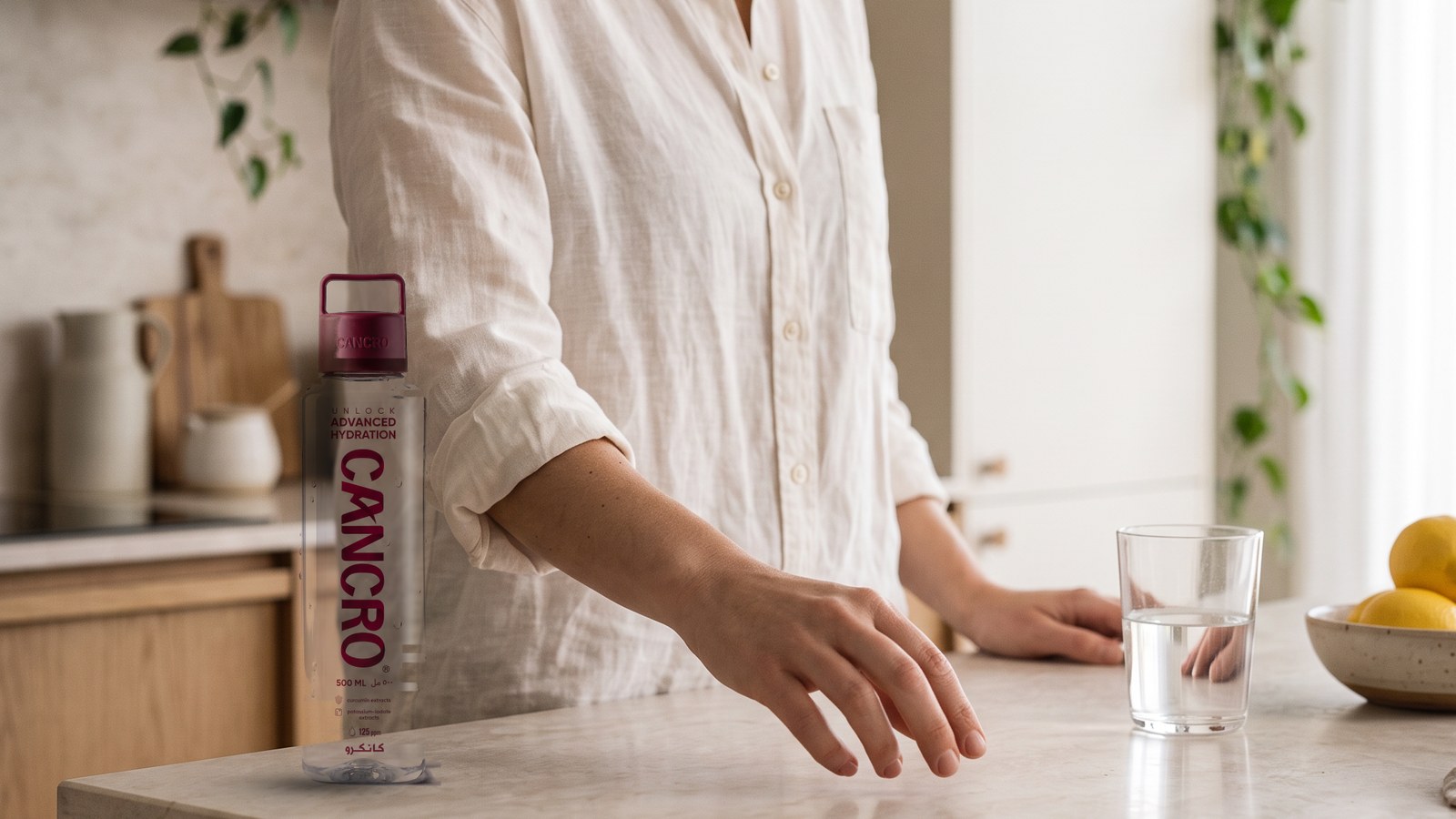
A bottled water label tells you how much is dissolved in the water (TDS), how acidic or alkaline it is (pH), and how much sodium, magnesium, potassium and calcium it contains, all in milligrams per litre. For everyday drinking in the UAE, look for a TDS under about 300 mg/L for a clean taste, a pH between about 6.5 and 8.5, low sodium, and a clear source. Deuterium is not on most labels; if a water claims to be deuterium-depleted, it should state its ppm.
Key takeaways
- TDS (total dissolved solids) is the sum of everything dissolved in the water. The WHO rates under 300 mg/L as excellent for taste and sets no health-based limit.
- pH has no direct health effect at normal drinking levels. It mostly reflects the minerals and processing.
- Mineral figures are small in daily terms: 10 mg/L of magnesium across 2 litres is 20 mg, against a reference intake of 300 to 350 mg a day.
- Low sodium is useful for anyone watching salt. People start to taste sodium at around 200 mg/L.
- Deuterium is only stated by deuterium-depleted waters. Look for the ppm and batch testing.
Where UAE drinking water comes from
Most tap water in the UAE is produced by desalinating seawater, which yields very pure water with almost no minerals. Utilities then re-mineralise it and treat it to drinking standards. Bottled waters sold in the UAE come from several routes: purified and re-mineralised water, natural groundwater or spring sources from the region, and imported mineral waters. That is why two clear bottles on the same shelf can carry very different numbers.
TDS: what the number means
TDS is the total weight of minerals, salts and other dissolved matter, mainly calcium, magnesium, potassium, sodium, bicarbonate, chloride and sulfate. It is printed in mg/L, which equals ppm by weight. The WHO does not set a health-based limit for TDS, but it publishes how people experience the taste:
| TDS (mg/L) | How the WHO rates the taste |
|---|---|
| Below 300 | Excellent |
| 300 to 600 | Good |
| 600 to 900 | Fair |
| 900 to 1,200 | Poor |
| Above 1,200 | Unacceptable |
Very low TDS is not unsafe, but water with almost nothing dissolved can taste flat. That is one reason distilled and RO waters are often re-mineralised. Cancro has a TDS of 45 after magnesium and potassium are added back: light, but not empty.
pH: acidic, neutral or alkaline
pH runs from 0 to 14, with 7 as neutral. The usual range for drinking water is about 6.5 to 8.5, and some standards go up to 9.5. The WHO treats pH as an operational parameter rather than a health one. At normal levels it does not change anything in the body, because the stomach is strongly acidic and blood pH is held steady regardless of what you drink. A pH near 7 to 8 usually indicates a balanced, lightly mineralised water. Our comparison of alkaline, hydrogen and deuterium-depleted water covers high-pH waters in detail.
Magnesium and potassium: what the mg/L adds up to
Magnesium is a cofactor in hundreds of enzyme systems, including those for energy production and muscle and nerve function. Potassium helps maintain fluid balance and normal cell function. You lose some of both in sweat. On a label they are listed per litre, and the useful check is to multiply by what you actually drink:
| Mineral | In drinking waters | Example: 2 litres a day | EFSA adequate intake per day |
|---|---|---|---|
| Magnesium | From about 1 to over 120 mg/L | 10 mg/L × 2 L = 20 mg | 350 mg (men), 300 mg (women) |
| Potassium | Usually low; check the label | 5 mg/L × 2 L = 10 mg | 3,500 mg |
Food supplies most of your magnesium and potassium. Water contributes a modest, steady extra, which matters more in hot climates where you drink and sweat more. For training in the heat, see our hydration guide for Dubai heat; for fasting days, see what to drink during intermittent fasting.
Sodium
Most still waters are low in sodium. People start to taste it at around 200 mg/L, according to the WHO. If you are watching salt, choose waters at the low end of the label range. After heavy sweating in the heat, sodium is better replaced through food or a proper electrolyte drink than through mineral water.
Where deuterium fits, and why most labels leave it out
Ordinary water contains about 150 ppm deuterium, the heavier natural form of hydrogen. Because standard bottled waters do nothing to change it, their labels do not mention it. Only deuterium-depleted waters state a figure. If you see one, check that it gives a specific ppm (for example 125 ppm) and that each batch is lab-tested. A vague “low deuterium” is not enough. See deuterium ppm levels explained and how deuterium-depleted water is made.
Storage matters in UAE heat
Bottles left in a hot car do not just warm up. Research on PET bottles found that antimony, a trace element used in making the plastic, migrates into the water far faster at high temperatures than at room temperature. Keep water cool and out of direct sun, and for the dinner table consider glass. Cancro comes in both a 500ml slim bottle and a 750ml glass bottle.
A 30-second label checklist
| Look for | Good sign | Ask yourself |
|---|---|---|
| Source | A clearly named source or process | Is it purified, spring or mineral water? |
| TDS | Under about 300 mg/L for a light, clean taste | Do I prefer light or strongly mineral water? |
| pH | About 6.5 to 8.5 | Is a very high pH being sold as a health benefit? |
| Sodium | Low, if you are watching salt | Am I replacing sweat losses some other way? |
| Magnesium and potassium | Listed in mg/L | What does it add up to over the 1.5 to 2 litres I actually drink? |
| Deuterium (if claimed) | A stated ppm and batch testing | Can the brand show a test result? |
For everyday drinking, the right water is the one you will drink enough of. Even mild dehydration has been shown to lower mood and concentration in studies of healthy adults, which is easy to overlook in air-conditioned offices. Cancro is lab-tested at 125 ppm, with magnesium and potassium, no sugar and no caffeine, delivered across the UAE.
Frequently asked questions
What TDS level is best for drinking water?
There is no single best value. The WHO rates water under 300 mg/L as excellent for taste and does not set a health-based TDS limit. Many people prefer light waters roughly between 30 and 300 mg/L.
Is low-TDS water bad for you?
No. Low-TDS water is safe to drink; it can simply taste flat. Your minerals come mainly from food, which is why many purified waters are lightly re-mineralised for taste.
Is water with a pH above 8 healthier?
Not in any established way. Stomach acid neutralises it quickly, and blood pH is controlled by the body regardless of what you drink. pH mainly tells you about the water’s minerals and processing.
Is desalinated water healthy to drink?
Yes. UAE tap and bottled waters made from desalinated seawater are re-mineralised and treated to drinking-water standards. Desalination produces very pure water, so minerals are added back for taste and stability.
Does bottled water in the UAE contain magnesium?
Many brands list some magnesium, and drinking waters range from about 1 mg/L to more than 120 mg/L. Check the label and multiply by how much you drink each day.
Why don’t water labels show deuterium?
Because standard waters do not change it; they carry the natural level of about 150 ppm. Only deuterium-depleted waters state a ppm, and they should back it with batch testing.
Sources
- World Health Organization. Total dissolved solids in drinking-water: background document for the WHO Guidelines for Drinking-water Quality.
- World Health Organization. Guidelines for drinking-water quality, 4th edition incorporating the first and second addenda, 2022.
- World Health Organization. Calcium and magnesium in drinking-water: public health significance, 2009.
- NIH Office of Dietary Supplements. Magnesium: fact sheet for health professionals.
- EFSA Panel on Dietetic Products, Nutrition and Allergies. Scientific opinion on dietary reference values for magnesium. EFSA Journal, 2015.
- EFSA Panel on Nutrition, Novel Foods and Food Allergens. Dietary reference values for potassium. EFSA Journal, 2016.
- Westerhoff P, Prapaipong P, Shock E, Hillaireau A. Antimony leaching from polyethylene terephthalate (PET) plastic used for bottled drinking water. Water Research, 2008.
- Armstrong LE, Ganio MS, Casa DJ, et al. Mild dehydration affects mood in healthy young women. Journal of Nutrition, 2012.
- Ganio MS, Armstrong LE, Casa DJ, et al. Mild dehydration impairs cognitive performance and mood of men. British Journal of Nutrition, 2011.
Written by the Cancro team in Dubai and last reviewed on 11 October 2026. Sources are listed above and linked where they are openly available. Cancro is a drinking water, not a medicine, and is not intended to diagnose, treat, cure or prevent any disease. If you have a medical condition, ask your doctor before changing what you drink.